Tuesday, June 2, 2015

From Olives to Olive Oil


After the truck dumps the olives, workers judge the ripeness of the particular load. The mix of green and purple indicates what the balance of flavors will be: bitter, fruity, grassy, etc. North Americans, who use relatively little olive oil prefer a blander taste than Spaniards and Italians who enjoy a more robust flavor. More green olives = more grassy, amargo (bitter) taste. I'm starting to really like flavor in my olive oil. The greener the better in my book! 


This batch of olives has a good blend of the ripe (purple) fruit with the less ripe (green) olives.


Conveyor belts move the fruit from the basement to a series of points where it is washed, leaves and non-olivey objects are separated out and into a series of machines that shake, rattle and roll (just kidding--I have no idea what happens, but it involves mashers and centrifuges and magic but NO HEAT). Don't let the three people who have explained it to me know that I suggested I didn't understand the process completely!

 This slurry gets refined and separated every step along the way---


.....until wah-lah! Olive oil!!


 The oil is stored for a time in the tanks with legs and a funnel-like base for any water or solids to sink to the bottom and be drained off and then in gigantic tanks (over a million gallons of storage capacity in these 40 tanks) in a climate-controlled room ready to be sold to wholesalers and exported.


This is the General Manager and Company Vice President and family that we love. Just having a tour with the commoners...... Austin prides himself on making funny faces, Dakota has redeemed that name for me, Madi is just eleven and knitting socks because I'm an awesome teacher and Dillon wanted a short list of things for his birthday--the last thing on the list was, "Bagleys." How could you not love him?


So once the oil has been extracted, some byproducts have to be dealt with. The pits become this material in my hand, piles of which are in the other two pictures. It is burned in the bio-masa red machine to provide energy for the plant~ very efficient and resourceful! I'm not sure what happens to the leaves and twigs, but it's an impressively small pile in comparison with the pit material.


The sloppy olive mash after the oil is extracted gets loaded on a truck and hauled to an area of the fundo where it's hilly and wild. There's quite a quantity of this residue, but a large area for it. It looks like a river of tar and smells woody and rich at this point. The wild horses seem to enjoy eating it. 


Watch for Chilean olive oil in your local grocery store. It's being sold to companies who will bottle it under their own label, but for the last two years, it was bottled and given as gifts under the label ARC (AgroReservas de Chile) with a picture of Noah's ark. The purpose of this farm is investment in the land, primarily, but also to produce food reserves in times of need. I'm happy we won't have to rely on Crisco for our fat allotment in a famine, aren't you?


Monday, June 1, 2015

Harvest! The culmination of a year's worth of work and anticipation


The harvest is going on night and day for about a month. Last year was the first mechanical harvest, with "try it out" equipment and very limited scope. I'm just remembering a day or two.
When all the trees are producing, it is estimated that these harvesters be operating for 70 days, 24 hours a day. 


This year, there are three behemoth harvesters that drive right over the trees, snarfing up the olives and leaving the leaves and branches pretty much intact. Olives go through the tall arm into a bin (metal with green framing) driven in the adjacent row. When this container is full, it dumps the fruit into larger trailers parked along the road.


A few of the small end trees suffered as drivers learned how to maneuver the harvesters.


  Overhead shot of a bin just beginning to fill up.
Truckloads of olives come first to the reception building where the load is weighed and data is collected. Then the olives are dumped into a chute to the basement where the fruit begins the process of becoming olive oil.


We have heard different reports about the harvest, but so far it looks wildly successful. Anywhere from 1/3 more than expected to four times the expectation. The workers are exhausted, the wives are weary (we've done guard-dog duty staying overnight at homes where hubby wasn't home) and the lights don't seem to go out in the fields or the mill; but after this week it should be done. It's 11:30 at night and I just heard another truck rumbling by. Thrilling!

Friday, May 29, 2015

Millions and Millions and Millions of Trees


 The baby trees are grown in a nursery and come to the farm in these boxes. Workers with various tractors and disks first prepare the soil, then others lay irrigation tubes. They place bamboo poles in mathematically perfect rows--by measuring and by "eyeballing," as Mom would say, so that the planters know just where to place each tree.
After the ground is watered for a day, one by one, all six million+ trees are planted by hand. Last year, we were told that the fastest workers could plant a thousand trees in a day. With improved soil preparation and having the protective bags already on the trees, now we hear that they are planting at twice that rate! Eventually, plastic-coated wires are strung to connect the "bamboos" and each tree is tied to the wire.
Here's what the vineyard looks like after a couple of years growth, some pruning and much work.

Besides growing trees, the farm has to move water, lots and lots of water, even though the trees only get it a drip at a time.You can see two of the big water storage lagunas. The farm has 34 wells with computerized pumps and irrigation systems and a number of these lagunas. (The building is the oil processing plant and office building being built. Our Learning Center is part of the itty bitty looking building to the left of the gigantic building.)
 The green in the photo below looks like grass--but it's thousands of trees that are 2-3 years old. 
If you look closely, you can see the new rows of trees in the foreground.

 A little tree doing its best....
Trees less than a year old with the "almasara" olive mill building in the background. With those hills and sky is it any wonder this feels like home to us?

Sunday, May 10, 2015

Visitors: the Prequel

Yes, we did have visitors before the boys. JuliaAnne and Saundra were here for a whirlwind few days (Saundra) and slightly more than a week (Ju). It was wonderful! First, just seeing Julianne so healthy and fit and energetic after last years' scare was such a relief. It bathed the entire time for me in joy and gratitude. We took long walks, she took long runs, we visited everyone we know here, they saw our teaching and missionarying and we were able to take some interesting side trips as well.
 We started off by overwhelming them with a supersized completo from La Plancha--at least a foot long hot dog smeared with avocado and tomatoes. Then we overwhelmed them with seeing nearly seven million trees at different stages of growth. Predictably, Saundra contributed to the planting effort. Seven trees closer to seven million!

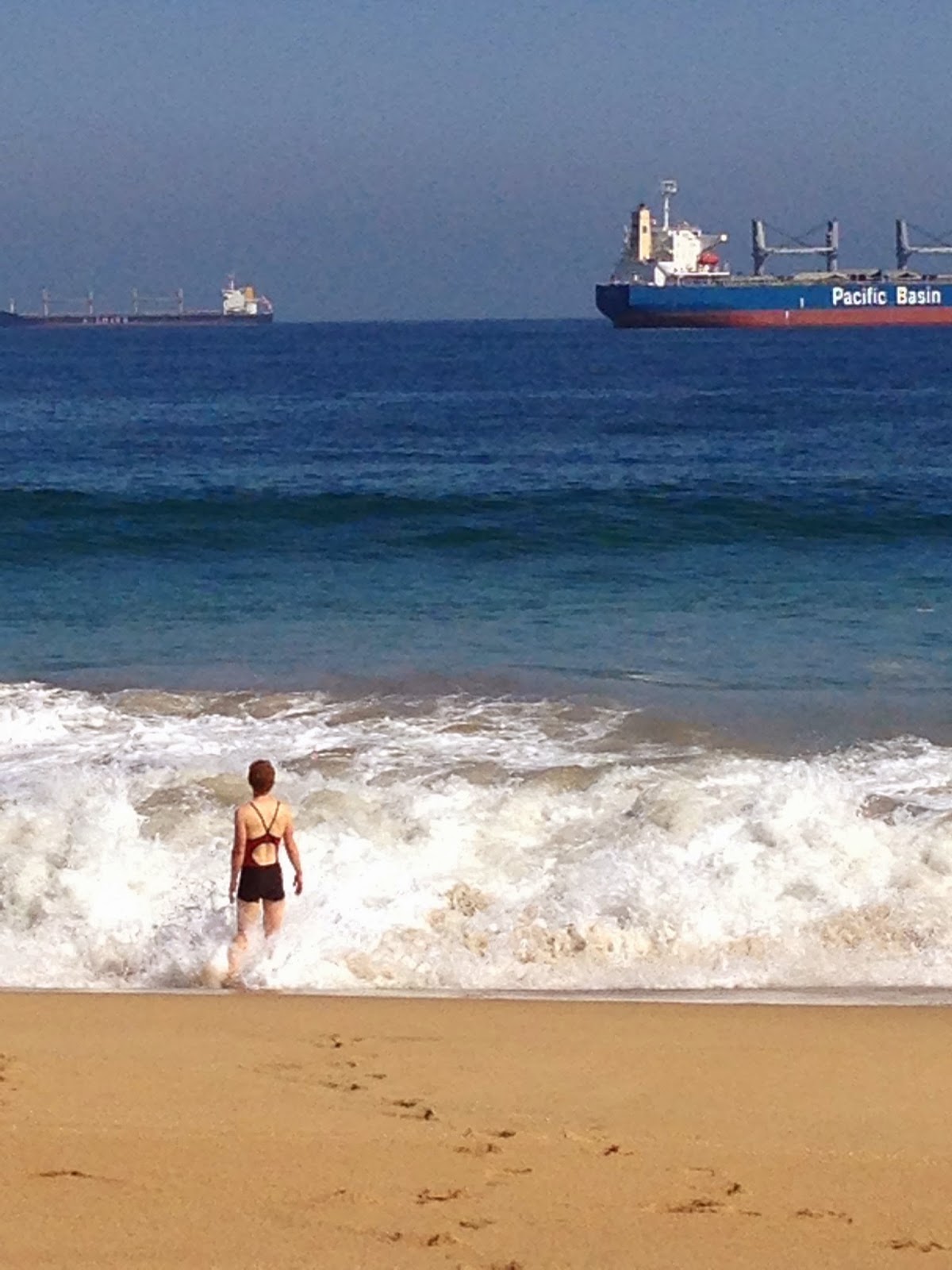
We ate pastel de choclo and empanadas in Pomaire, tried to get up to the Andes, succeeded in finding the ocean--they jumped right in!--and ate at a Chilean food all you can eat cafeteria before sending Saundra off at the airport.  We stayed up late enough and slept in long enough that I don't think jet lag was a factor. At least, I hope not, because she was the featured speaker at a big event in Logan the day she got home. We love her so much for coming!!!

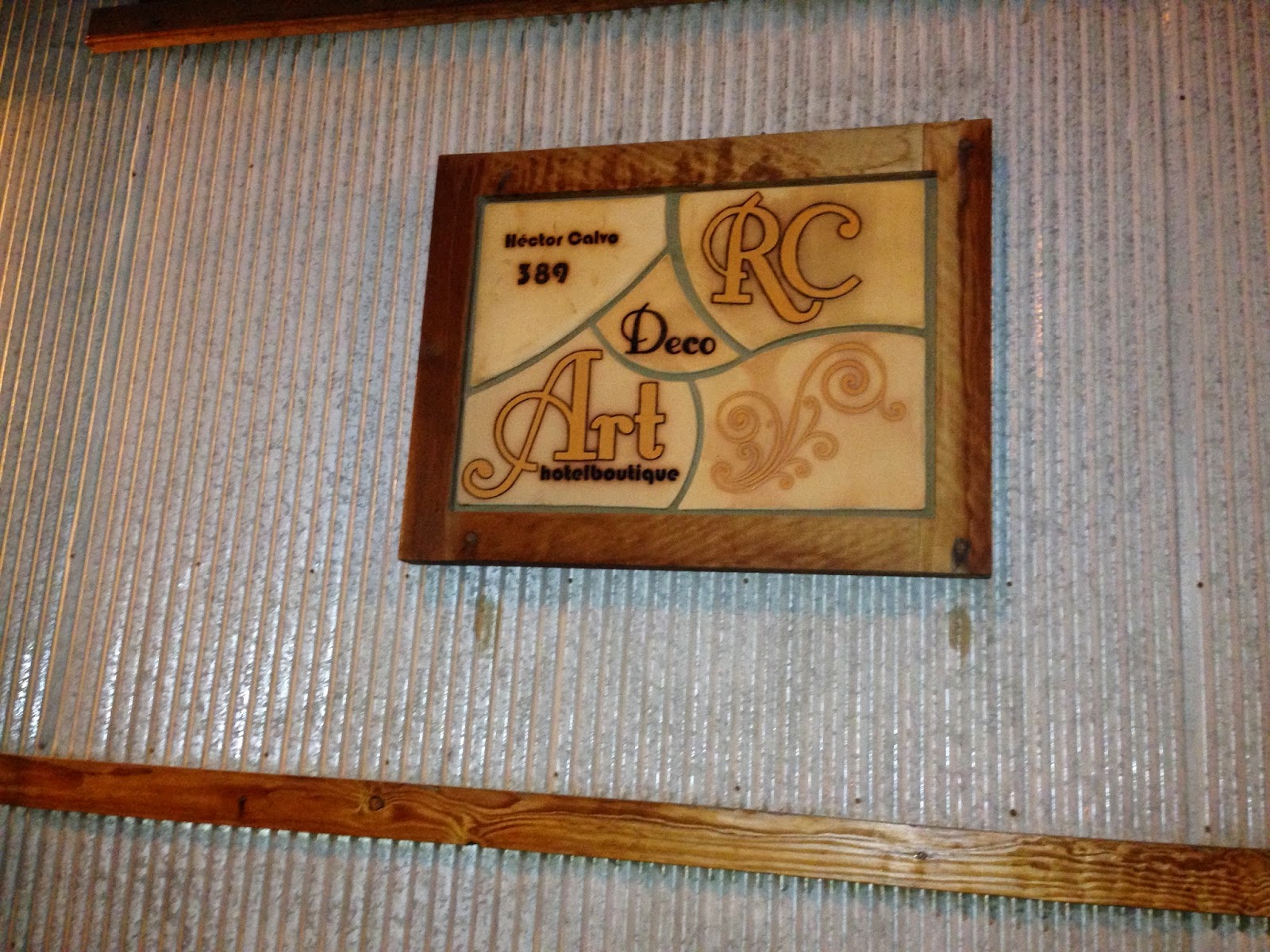
 We took off for Valparaiso and Viña del Mar after teaching one evening. Jay made reservations sight unseen and held his breath. When we had a hard time finding it in the narrow 45 degree steep streets, Julianne went into a little corner tienda to ask directions. The shopkeeper had NO IDEA, but eventually, after backing up a one-way street for two blocks to make way for a truck, we eventually found the Art Deco Hotel......two doors down from the shopkeeper who hadn't heard of the place.


 It was charming and comfortable and it was fun to observe Jay's relief in the morning at the continental breakfast when he saw regular tourists and not a bunch of drug-dealers and hookers. He kept saying, "This hotel has people from Europe! Nice people!" Valparaiso is old and fabulous and run-down and eclectic: wonderful contrasts. We found the cemetery where there's a memorial for Parley P. Pratt's infant son, Omner, who died when PPP was there attempting to spread the Gospel without a grasp of Spanish and without anything written in Spanish for the locals to read. He left vowing to rectify the later before another attempt. The baby, not being Catholic, was considered a "disident." It's actually a nice cemetery, and happily, was a short walk from our hotel. As was the Holy Ghost Lift that I wrote about in another blog. I so love those ancient mechanical elevators!


Viña del Mar, is upscale, modern and fabulous in a different way. It has a museum of historical artifacts--including one of the moai from Isla de Pascua (Easter Island), lots of beautiful beaches, hotels and restaurants. JuliaAnne had to take another dip in the ocean at Viña just because it was there.


It's hard to get a bad picture of a beautiful person, but we managed to with this eyes-closed shot of our Hoolie, but here she is at the Santiago Temple before flying home. Thank you, Paul, for giving us the gift of time with our little redhead.

Visitors

Shawn and Will visited for a week and came with lists of things to do. Some of our Chilean friends have been amazed at what we managed to hunt down. Will read about some pre-Incan ruins not far from where we live. After using Dave the annoying GPS and getting in the general area, nobody seemed to know what we were talking about. The boy scout camp leader just over the hill from where they ended up being claimed no knowledge of the site, as did the townsfolk we asked. But thanks to sleuthing ahead of time, a willingness to get shot, and Jay's legendary perseverance, we found Pukara de la Compania, the "final frontier" of the Inca Trail. Some guys working on a car beside a park at the end of a very narrow street gave us general directions and we headed off through a plum orchard in search. The plums were luscious and worth the trip.
 But we did find the ruins--at the top of a hill with good views in three directions. The air was not as clear as usual because of a volcanic eruption to the south a couple of days before.


 There were a number of these sites, some with rocks stacked up like these, and others with just the foundation stones.

In Santiago, we paid homage to the many missing and dead at the Museum of Memory and Human Rights documenting the abuses of the Pinochet Dictatorship--very well done and interesting about one of the many parts of recent history that I paid too little attention to at the time; but noting that like all history, this one had a point of view, and one that gave no attention to the abuses of Allende, who was overthrown by Pinochet.

 Shawn took some amazing photos throughout the week. This guard tower is one of his best.

We baked in the horno de barrow (mud oven) twice! I want one. We even baked bread in the coals like the primitive people did and Chileans still like to do from time to time. I hear ashes give you curly hair?
A friend helped us locate a real Chilean rodeo. I loved the outfits and the horsemanship and teamwork they use to trap a calf against the fence. "Punto mal!" the announcer would shout, or "Punto bueno!" (Bad point, good point) It's our new way of judging various actions. "Punto mal!" when the joke just falls flat or I spill the mate. "Punto bueno," for Jay's successfully negotiating the visa process and getting ever so much closer to our visa renewals.


San Cristobal Hill and another acensor--this one over three minutes long. Halfway up, you can get off at the zoo, but we zoomed on past and explored the top of the hill where you can look down in all directions and see the metropolis of Santiago, where a third of the population of Chile lives. 

I love this place so much, I could almost weep to think of leaving. But I love those boys and the others we can rejoin in just a few weeks, too, and I could weep thinking of the joy of being there. Gains and losses. We loved this time with our boys.

Espiritu Santo


Espiritu Santo Ascensor in Valparaiso, Chile, built in 1911. The narrow little doorway, the obscure sign marking the door. The great and spacious buildings. The shanties; the squalor. The steep ascent. The distance to climb. 

I love the metaphor.

I recommend James Talmage's Articles of Faith chapter on the Holy Ghost. Intriguing doctrine including:

"The Holy Ghost may be regarded as the minister of the Godhead, carrying into effect the decision of the Supreme Council.

In the execution of these great purposes, the Holy Ghost directs and controls the varied forces of nature, of which indeed a few, and these perhaps of minor order wonderful as even the least of them appears to man, have thus far been investigated by mortals. Gravitation, sound, heat, light, and the still more mysterious and seemingly supernatural power of electricity, are but the common servants of the Holy Ghost in His operations. No earnest thinker, no sincere investigator supposes that he has yet learned of all the forces existing in and operating upon matter; indeed, the observed phenomena of nature, yet wholly inexplicable to him, far outnumber those for which he has devised even a partial explanation. There are powers and forces at the command of God, compared with which electricity is as the pack-horse to the locomotive, the foot messenger to the telegraph, the raft of logs to the ocean steamer. With all his scientific knowledge man knows but little respecting the enginery of creation; and yet the few forces known to him have brought about miracles and wonders, which but for their actual realization would be beyond belief. These mighty agencies, and the mightier ones still to man unknown, and many, perhaps, to the present condition of the human mind unknowable, do not constitute the Holy Ghost, but are the agencies ordained to serve His purposes."

Well now. My poem from twenty years ago calling Uncle Eldon's "water witching" ability a "gift from God made manifest," was right in line with Elder Talmage.

Is my love of nature, my feeling of wholeness in the wilderness, one of the "gifts" of the Holy Ghost?

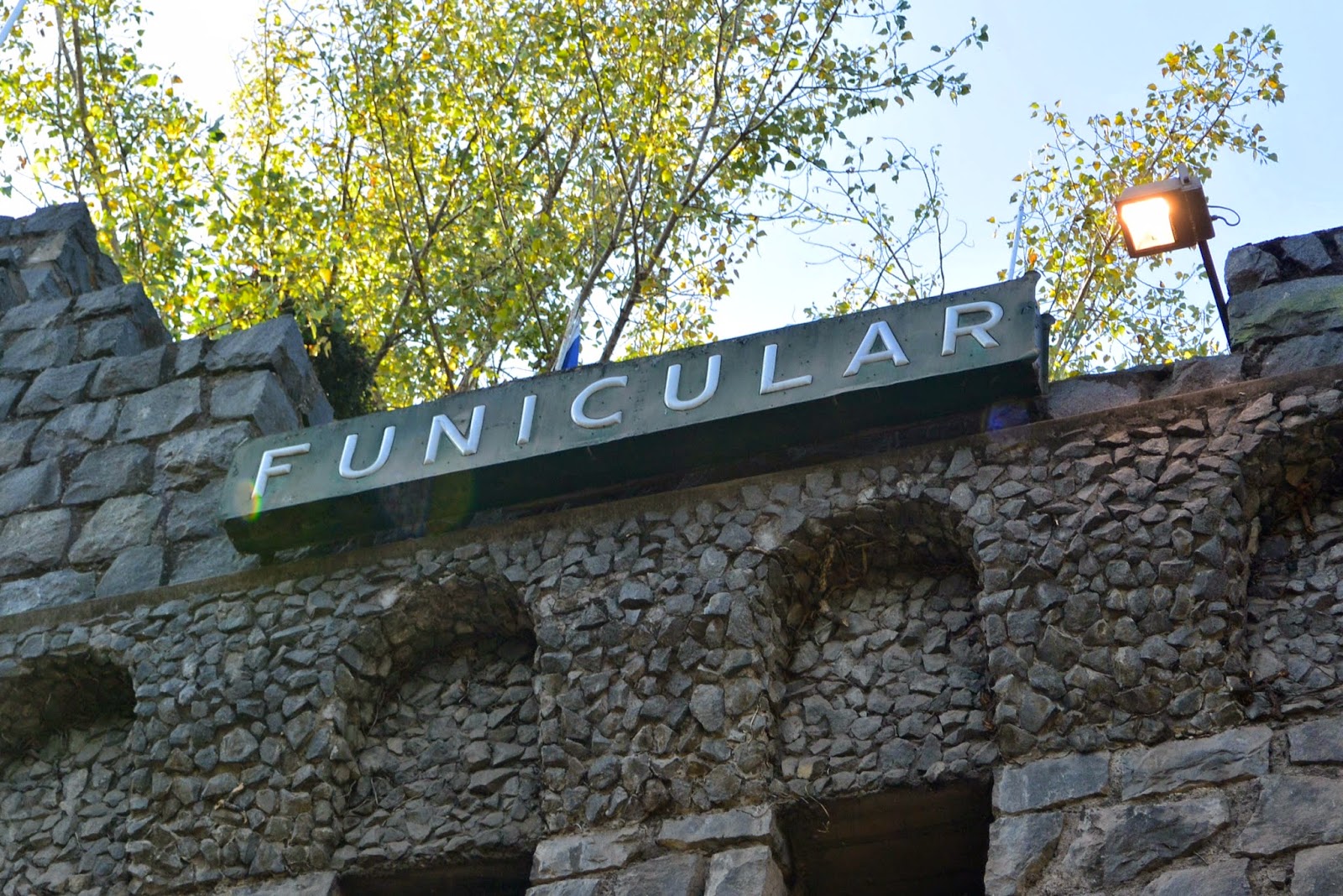
Clattering up the hills of Valparaiso or Santiago on hundred year-old funiculars invented and built by enlightened men, or rapturously experiencing the forces of nature beside a pounding ocean or rustling cottonwood trees, or hearing screaming hawks.....could these experiences be as truly spiritual as they feel to me?